

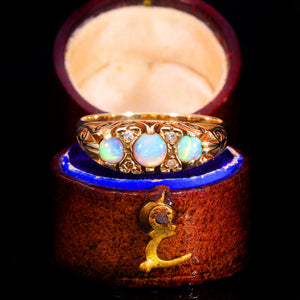
Winter is one of the most magical times of the year, but it can be surprisingly harsh on your jewellery. From cold weather and central heating to festive outings and frequent wear, antique and vintage rings need a little extra care during the colder months. With the right approach, you can keep your jewellery sparkling beautifully from December through to spring.
How Does Cold Weather Affect Jewellery?
Cold temperatures cause your fingers to shrink slightly, which can make rings feel looser. This increases the risk of them slipping off — especially in snowy or wet conditions where you might not notice straight away.
Cold air can also make metals more brittle, and sudden temperature changes may affect certain gemstones, including opals, turquoise and pearls, which naturally contain moisture.
How Can Central Heating Impact My Jewellery?
While cold air dries gemstones out, central heating does the same — just in the opposite way. Rapid movement between outdoor cold and indoor heat can put stress on gemstones, causing:
- Opals to craze or crack
- Pearls to become dull or dehydrated
- Turquoise to change colour over time
This is especially important for antique jewellery, where gemstones may have already experienced a century or more of wear.
How Should I Store Jewellery in Winter?
Proper storage protects your pieces when you're not wearing them. During winter, it becomes even more essential.
- Store jewellery in a stable environment.
- Keep pieces separated to prevent scratching.
- Use soft-lined boxes or pouches to buffer against temperature changes.
Every purchase from us arrives in a beautifully crafted box — ideal for safe long-term storage. You can view our packaging here.
How Do I Protect Gemstones During Winter?
Different gemstones have different needs. Antique and vintage rings often feature softer gems, so care is essential.
- Opals: avoid sudden temperature changes and indoor heating vents.
- Pearls: store away from dryness; avoid perfumes and hairsprays.
- Turquoise: keep away from prolonged direct heat.
- Emeralds: avoid icy water; emeralds are brittle and can fracture.
Diamonds, sapphires and rubies are more durable, but their settings can expand and contract in extreme temperatures — always check the security of claws and prongs.
Should I Remove My Jewellery More Often in Winter?
Yes — certain winter activities can put jewellery at risk:
- Taking gloves on and off (rings can slip unnoticed)
- Carrying bags, which can pull at settings
- Washing hands frequently in hot water
- Applying hand creams (which dull shine and attract dirt)
If in doubt, remove your ring and store it safely until you're finished — especially if you're wearing an antique or vintage piece.
How Should I Clean Jewellery During Winter?
A gentle clean goes a long way to keeping your jewellery looking bright. Use:
- Warm water (never hot)
- Mild soap
- A soft brush
For detailed advice, see our full jewellery care guide. Harsh chemicals and ultrasonic cleaners are not recommended for antique rings or softer gemstones.
What About Hallmarks and Winter Wear?
Cold weather won’t damage hallmarks directly, but frequent wear can cause them to become less readable over time. You can learn more about identifying and protecting hallmarks using our Hallmark Finder Tool.
Winter Jewellery Care Checklist
- Check ring fit regularly.
- Avoid sudden temperature changes.
- Store properly in a lined jewellery box.
- Remove rings before using gloves, creams or hot water.
- Clean gently using mild soap and water.
- Inspect claw settings for movement.
By following these tips, your antique and vintage rings will stay as beautiful in winter as they are in summer — ready to shine throughout the festive season and beyond.